
Outdoors
Hiking & Mountains
Mauritius rises from sea level to 828m. Volcanic peaks, endemic forest, and ridge walks with views across both coasts.
The Mountains of Mauritius
A volcanic interior worth exploring
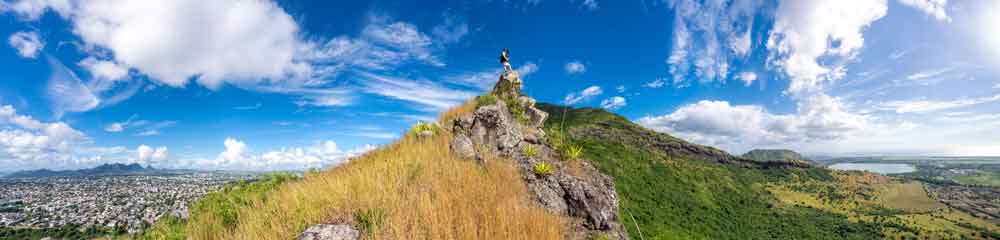
Most visitors come to Mauritius for the beaches — and never look up. That is their loss. The island's mountainous interior is extraordinary: jagged volcanic peaks rising from dense endemic forest, ridge walks with panoramas across turquoise lagoons, and trails that pass through ecosystems found nowhere else on earth.
The highest point is Black River Peak at 828m. Le Morne Brabant (556m) is the most iconic. Le Pouce (811m) rises directly above Port Louis. All are reachable in a half or full day. Hiking in Mauritius requires no special equipment beyond decent shoes, sun protection, and water — but should be done with respect for conditions and weather.
Highest Peak
Black River Peak — 828m
Best Season
May to October (dry & cool)
Guides Required
Le Morne, Tamarind Falls
Average Half-Day Cost
Rs 400–1,200 (guide fees)
All Trails
6Hikes & Trails
 Hard
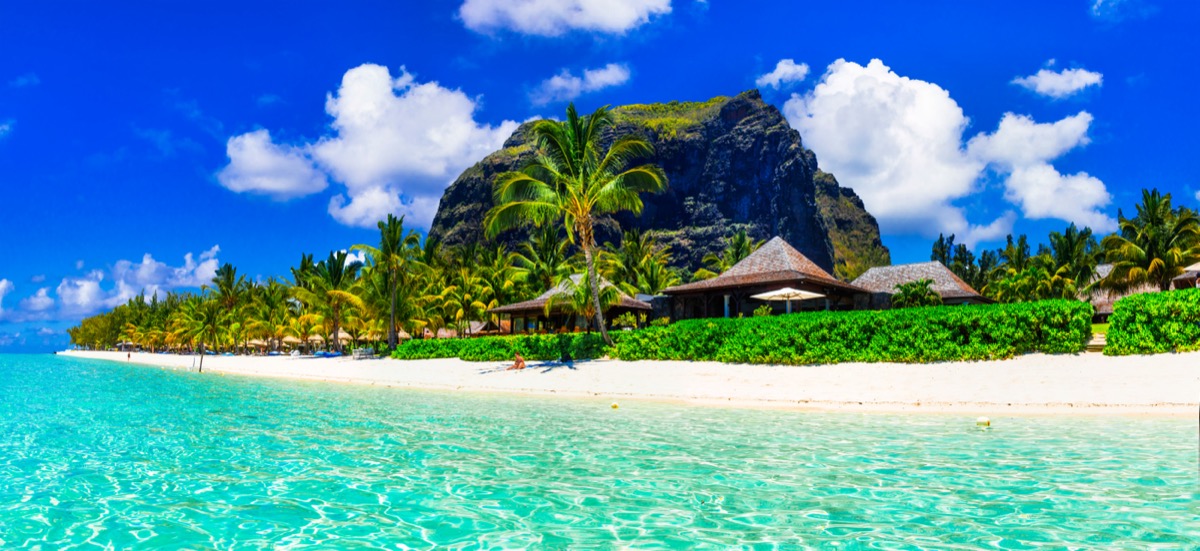
HardLe Morne Brabant
UNESCO World Heritage — the most dramatic peak in Mauritius
4h
556 m
5 km
 Moderate
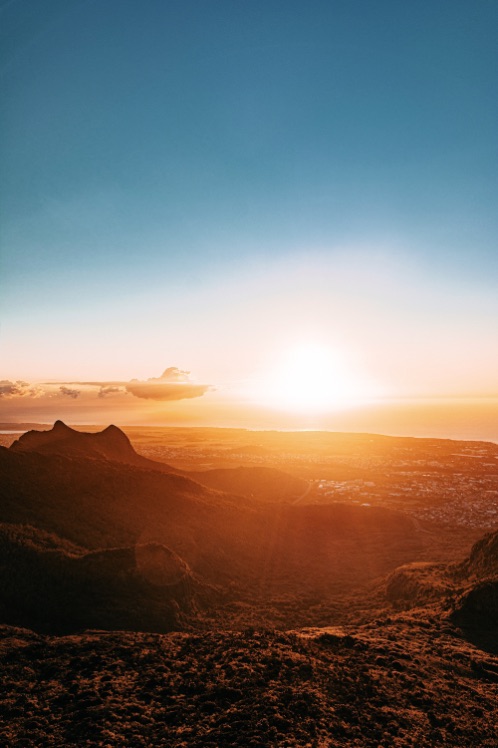
Le Pouce
The thumb-shaped peak above Port Louis — a classic Mauritius hike
3h
811 m
7 km
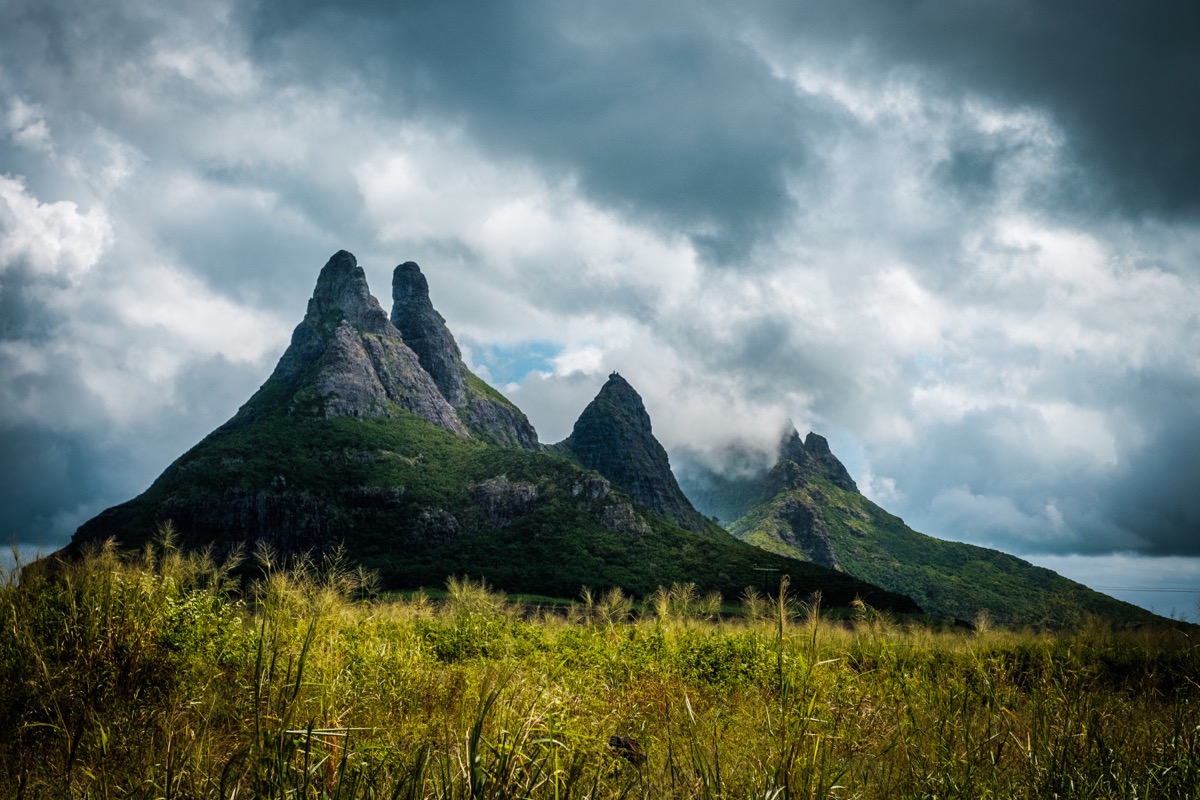
 Hard
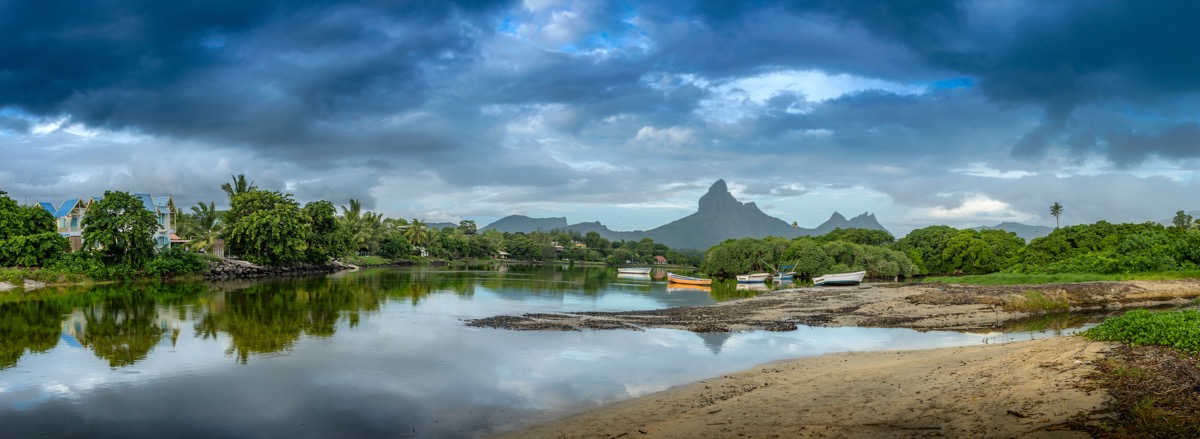
HardBlack River Peak
The highest point in Mauritius — challenging, rewarding, remote
5h
828 m (highest point in Mauritius)
10 km
 Hard
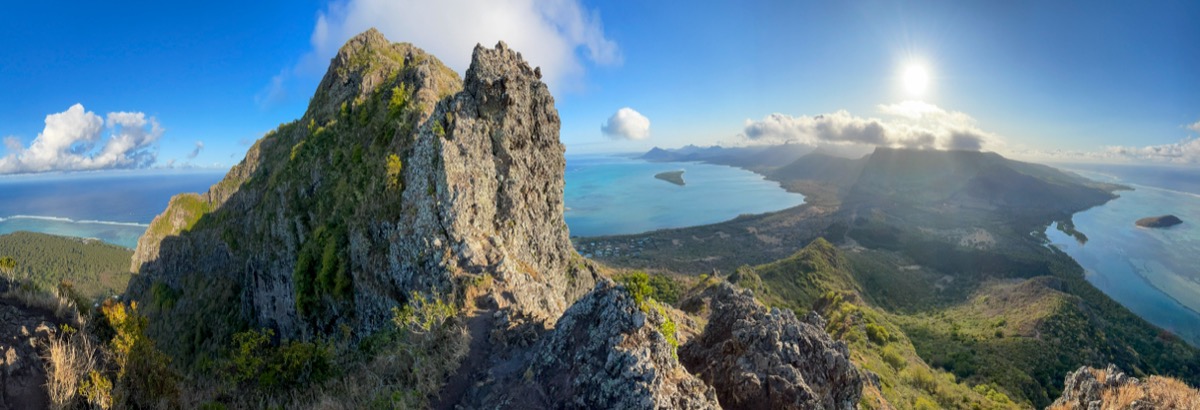
HardLion Mountain
A dramatic ridge walk with the shape of a sleeping lion — views over Grand Port
4h
480 m
6 km
 Moderate
Corps de Garde
The guardian mountain of the west — a rewarding half-day hike
3h
720 m
5 km
 ModerateSwimming
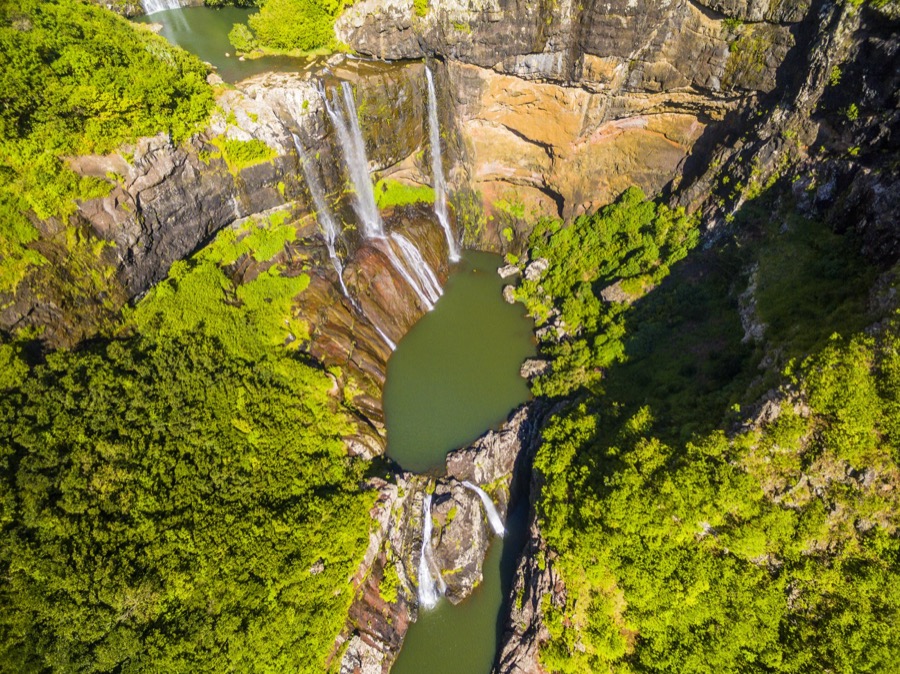
Tamarind Falls (7 Cascades)
Seven waterfalls, jungle swimming pools, and jungle canyon walking
3h
200 m
8 km
Before You Hike
Mauritius mountains are beautiful but require preparation. Read this before heading out.
Start Early
Begin all hikes before 8am. Temperatures rise rapidly after 9am, especially on exposed ridges. Summer (Dec–Mar) is punishing by mid-morning.
Water
Carry at least 1.5L per person for moderate hikes; 3L for hard hikes. Dehydration is the most common problem on Mauritius trails.
Weather
Weather changes fast in the mountains. Clouds build quickly and can reduce visibility to zero. Rain makes volcanic rock extremely slippery — dangerous on exposed ridges.
Guides
Guides are legally required for Le Morne and recommended for Tamarind Falls and Lion Mountain. For other trails, a local hiking companion adds safety.
More outdoor adventures